- info@manvihospitals.com
- +91 9391176126
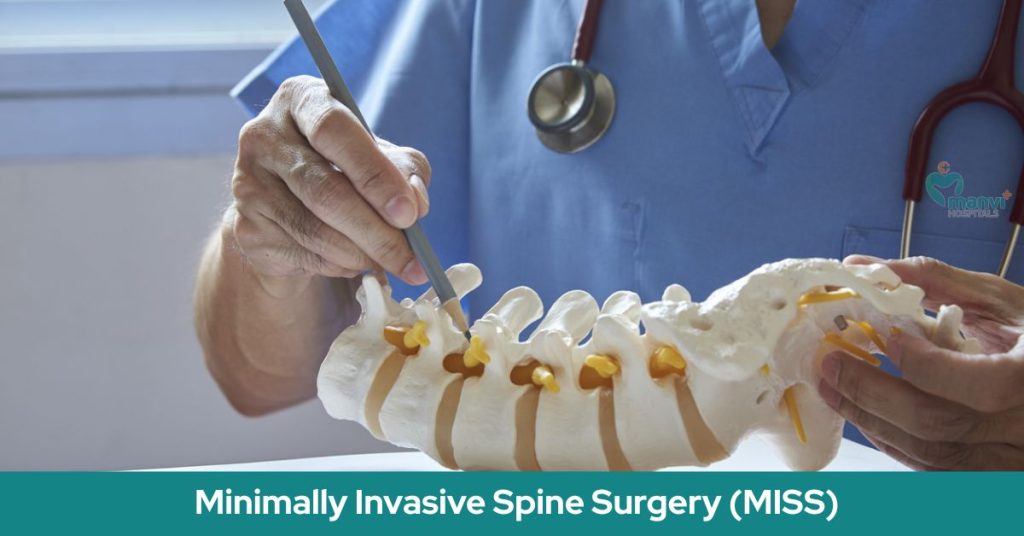
Minimally Invasive Spine Surgery (MISS) is a modern surgical technique that helps treat spinal disorders through smaller incisions and minimal tissue disruption. It’s a safe, precise, and advanced alternative to traditional open spine surgery. The focus is on reducing pain, scarring, and recovery time, helping patients return to normal life faster.
MISS offers several key benefits over traditional spine surgery:
Helps patients experience less postoperative pain and discomfort.
Uses smaller incisions, which means minimal tissue and muscle damage.
Leads to faster healing and shorter overall recovery time.
Results in minimal scarring and better cosmetic outcomes.
Causes less blood loss during the procedure.
Allows patients to leave the hospital sooner and resume daily activities earlier.
Enables a quicker return to work and normal lifestyle.
These benefits make MISS one of the most preferred choices for patients suffering from chronic neck and back pain.
Myth 1: Recovery Takes Months After Spine Surgery
Fact: Traditional open surgery may require long recovery periods due to large incisions. However, minimally invasive spine surgery allows faster healing, smaller scars, and early mobility — often within weeks.
Myth 2: Patients Need Multiple Surgeries After Spine Surgery
Fact: When performed by an experienced spine specialist after a correct diagnosis, additional surgeries are rarely needed. Skilled surgeons identify the root cause of pain and treat it effectively in a single procedure.”
Myth 3: Spine Surgery Can Cause Paralysis
Fact: This is one of the biggest misconceptions. In reality, spine surgery relieves pressure on nerves and restores mobility and comfort. Paralysis is extremely rare when the surgery is performed by a qualified neurosurgeon.
Myth 4: Spine Surgery Increases Pain
Fact: After surgery, patients usually experience less pain and improved mobility compared to their pre-surgery condition. Any discomfort is temporary and manageable with proper care.
Most cases of neck and back pain improve with physiotherapy, medication, or lifestyle changes.
A herniated disc occurs when spinal discs degenerate or get injured. MISS helps relieve nerve compression, reduce pain, and improve long-term spine health.
This condition causes chronic lower back pain. Surgery, like disc replacement, is considered when non-surgical treatments are no longer effective.
Spinal stenosis leads to narrowing of the spinal canal. MISS helps decompress the nerves, offering lasting pain relief and better function.
In severe conditions like Cauda Equina Syndrome, emergency spine surgery is necessary to restore bladder or leg function.
One vertebra slips forward over another, leading to pain and nerve problems. MISS realigns and stabilizes the spine effectively.
This spinal cord compression disorder affects balance and coordination. Surgery relieves pressure on the spinal cord and prevents further damage.
Endoscopic Surgery: A small camera and instruments are used for precise spine correction.
Microscopic Surgery: A microscope provides enhanced visibility for safe, accurate procedures.
Tubular Retractors: These special tools minimize muscle damage and blood loss.
Recovery after MISS is faster and more comfortable than traditional spine surgery.
Most patients resume daily activities within 2–6 weeks.
Short hospital stays and fewer complications.
Post-surgery physiotherapy ensures full mobility restoration.
Advanced imaging methods like fluoroscopy and intraoperative MRI improve precision and safety during surgery. These technologies help surgeons navigate accurately and ensure the best results for every patient.
Every spine problem is unique. It’s important to consult a qualified spine specialist or neurosurgeon to determine whether minimally invasive spine surgery is right for you.
MISS provides a modern, patient-friendly approach to spine health — offering quick recovery, less pain, and better long-term results.
If you’re suffering from persistent back or neck pain, consult a spine specialist today to explore the benefits of Minimally Invasive Spine Surgery (MISS).
If you’re experiencing chronic back, neck, or leg pain — don’t wait. Book your consultation with a trusted spine specialist today to see if Minimally Invasive Spine Surgery (MISS) is the right option for you.


Leave a comment